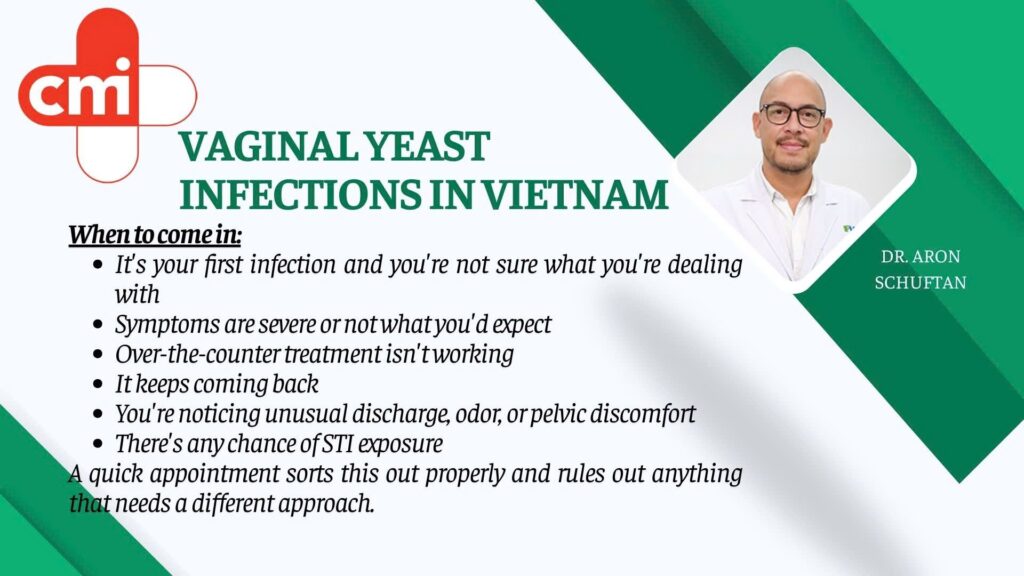

By Dr. Aron Schuftan · OB-GYN at CMI Clinic, Ho Chi Minh City
One of the most common things I deal with on a day-to-day basis is vaginal yeast infections. If you’re living in Vietnam, this will come up at some point. The climate plays a big role, and I see this far more often here than I did back in the U.S.
If you’ve recently moved here and feel like it’s happening more than it used to, you’re not imagining it.
* Why this happens more in Vietnam
Heat and humidity change the vaginal environment. Yeast thrives in warm, moist conditions. Add sweating, tight clothing, long commutes, gym sessions, or just getting caught in the rain — and you’ve got the perfect setup for overgrowth.
Candida, the fungus responsible, already lives in the vagina in small amounts. Problems start when something tips the balance.
* Common triggers I see in expat women here
Staying in damp clothes after workouts or rain
Tight leggings or synthetic underwear in hot weather
Frequent antibiotic use
Higher sugar intake or alcohol
Hormonal changes from birth control or pregnancy
Stress, travel fatigue, disrupted sleep
Usually it’s not just one thing. It’s a few factors building on each other at the same time.
* What it feels like
Most women recognize it quickly once they’ve had one before.
Intense itching or irritation
Thick white discharge, often clumpy
Burning with urination or during sex
Redness and swelling around the vulva
One key detail: there’s usually no strong odor with a yeast infection. If you’re noticing a fishy smell, that points to something else — more on that below.
* How common is this?
Very common. Most women will deal with at least one yeast infection at some point in their lives. In tropical climates, recurrence is more frequent. I see patients going through repeated episodes within months of arriving in Vietnam — it’s one of the most consistent patterns I notice in new expat patients.
* What actually works for treatment
Uncomplicated cases are usually straightforward.
Vaginal antifungal tablets or creams used over several days
Oral fluconazole when appropriate
External antifungal cream to settle the itching
Vaginal probiotics
* What else it could be
This is the part most people miss. Several conditions look very similar to a yeast infection on the surface.
Bacterial vaginosis — thinner discharge, often with a fishy odor. Very common here in the tropics.
Trichomonas — frothy discharge, irritation, sometimes odor. This one is sexually transmitted.
Contact dermatitis — a reaction to soap, wipes, laundry detergent, or hygiene products.
Atrophic vaginitis — more common around perimenopause or menopause. Dryness and irritation without any actual infection.
I see a lot of women treating themselves for yeast when the real issue is something different entirely. That delays the right treatment and drags out the symptoms.
A note on sexual exposure
Yeast itself isn’t a classic sexually transmitted infections (STIs). But new sexual activity can disrupt the vaginal microbiome and trigger symptoms. More importantly — if you’ve had unprotected sex, especially with a new or multiple partners, STIs need to be on your radar.
Chlamydia, gonorrhea, and trichomonas can all show up as irritation or unusual discharge. Sometimes the symptoms are very mild. Sometimes there are none at all. If there’s any doubt, testing is quick and straightforward — and worth doing.
* How to reduce your risk
You don’t need to overhaul your lifestyle. A few small habits make a real difference, especially in this climate.
Change out of wet or sweaty clothes as soon as you can
Wear breathable cotton underwear
Avoid staying in tight leggings for long stretches in the heat
Pat the area dry after showers rather than leaving it damp
Skip scented washes and avoid douching
Sleep without underwear when possible
Take antibiotics only when genuinely necessary
Keep an eye on sugar intake if you’re prone to repeated infections
Vaginal Probiotics
If infections keep coming back, we look deeper — blood sugar, hormonal factors, immune function, and sometimes a longer treatment plan for you and possibly partner.
* Bottom line
Yeast infections are extremely common here. The environment makes it easier for them to develop, and getting the diagnosis right from the start is what matters most.
If you’re dealing with this or not quite sure what’s going on, come in and we’ll figure it out together. At CMI Clinic, I see this every day — and we keep the whole thing simple, discreet, and effective.
Book an appointment at CMI Clinic for any of your women’s health concerns.
──────────────────────
 CMI (Centre Medical International)
 30 Pham Ngoc Thach, W. Vo Thi Sau, D.3, HCM City.
 028 3827 2366 //
  [email protected]